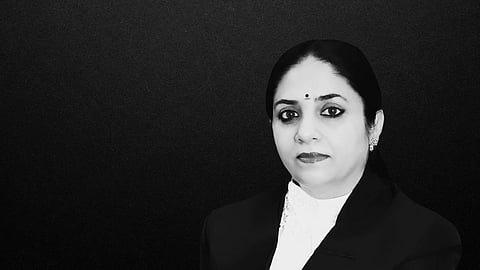
‘Recusal easy path but I will not recuse’: What reasons did Justice Swarana Kanta Sharma cite while rejecting Recusal application in Delhi Excise case?

Justice Sharma noted that the Court cannot be so fragile as to yield to imaginary apprehension of bias against the institution and should adjudicate in adherence to the Constitution and the law rather than unfounded insinuations.
‘Recusal easy path but I will not recuse’: What reasons did Justice Swarana Kanta Sharma cite while rejecting Recusal application in Delhi Excise case?
Published on

ON MONDAY, Justice Swarana Kanta Sharma refused to recuse herself from adjudicating the revision application against the Rouse Avenue Court’s decision to discharge all accused, including former Chief Minister of Delhi Arvind Kejriwal, in the Delhi Excise Policy Case. The decision came in the recusal application filed by Kejriwal and a few other accused persons requesting the recusal of Justice Sharma on the grounds of apprehension of bias on her part in the accused persons’ minds. 

In their application, they had averred that Justice Sharma’s language and tenor in her previous decisions involving the applicants evinced a preconceived opinion in the judge's mind regarding their guilt. Moreover, they argued that the Court, in the present revision petition, had been too generous to the Central Bureau of Investigation (‘CBI’). 

The applicants particularly stressed that the Court made prima facie observations against the discharge order of the Rouse Avenue Court, even without hearing the applicants. Kejriwal, in an additional affidavit, had further invoked the empanelment of Justice Sharma’s children as Central Government Counsel as a ground for recusal. 

On April 13, appearing in person, Kejriwal had listed ten reasons as to why a reasonable apprehension of bias had arisen – ranging from an order passed by her on March 9 where she remarked that the trial court’s discharge order was prima facie erroneous after a short, urgent hearing, to her participation in events of the Akhil Bharatiya Adhivakta Parishad, the legal wing of the Rastriya Swayamsevak Sangh. That day, Justice Sharma had reserved judgment. 

Integrity of the Institution

Recusal would have been the ‘quiet, easy and uncontroversial’ path after claims of impartiality were made against her, Justice Sharma started, almost as a proem for her judgment. But she had decided to hear and decide the application on merits, since the issue concerned the integrity of the judicial institution as a whole, and not just herself. “The litigants”, said the judge, “have put me and the [judicial] institution on trial.” 

She stressed that the conclusion of the case would undoubtedly set a precedent for future litigators, and that fact weighed heavily on her mind. Given the gravity of the matter, striking at the core of institutional integrity and her dignity as a judge, she believed that, rather than convenience, the case must be decided according to the country's jurisprudence on recusal.  

“Neither uncommon nor unusual for a Court to record a prima facie view”

The applicants had argued that the March 9 order, which prima facie recorded the trial court’s discharge order as “erroneous” was made after hearing the CBI for a mere ‘five minutes’ and without recording the submission of any of the accused persons. They had also argued that no proper notice had been served to the accused, and thus, they could not appear in the hearings Yet the order had observed that they had been duly served. They also took issue with Justice Sharma’s decision to stay the disciplinary proceedings initiated against the Investigating Officer (‘IO’) by the trial court, even when the CBI had never prayed for that relief.

‘Recusal easy path but I will not recuse’: What reasons did Justice Swarana Kanta Sharma cite while rejecting Recusal application in Delhi Excise case?
‘Court almost declared me guilty’: Arvind Kejriwal lists 10 reasons for Justice Swarana Kanta Sharma’s recusal

Yesterday, Justice Sharma observed that notice had been served to the accused persons’ advocates, all of whom have continued to represent the accused throughout the proceedings. Moreover, the Court held that, in the absence of the accused persons or their counsel, no prejudicial decision was given against the accused persons in the March 9 order.  

She also noted that it is“neither uncommon nor unusual for a Court to record a prima facie view”. In fact, it is a regular practice while granting interim relief. They are not conclusive or determinative, and only express the findings of the Court at that stage of the proceedings. No operative part of the order had adversely affected the accused persons. She referred to the Delhi High Court’s decision in AIIMS v. Prof. Kaushal K. Verma (2015), wherein it was held that “merely because prima facie observations were made while passing an interim order, it could not be said that the matter had been prejudged.”

Justice Sharma also rejected the arguments that the stay of disciplinary proceedings against the IO illustrated bias against the accused persons. It held that the stay did not have any bearing on the accused persons. The proceedings were directed on the own accord of the trial court, and not on the prayer of the accused persons. Therefore, the stay did not have relevance for them. 

Recusal would have been the ‘quiet, easy and uncontroversial’ path after claims of impartiality were made against her, Justice Sharma started, almost as a proem for her judgment.

Unfavourable Orders, Manish Sisodia’s Bail and RSS Affiliations 

Justice Sharma contended the argument put forward by applicants that she had a history of passing prejudicial orders against them, noting that she had passed many orders in other cases that had favoured members of Aam Aadmi Party. For instance, cases such as Raghav Chadha v. Chhail Bihari Goswami & Ors. (CRL.M.C. 8484/2023) and Satyendra Kumar Jain v. State &Anr. (CRL.M.C. 8514/2023), involving AAP leaders had been pending before her Court for two years; however no allegations of bias had been raised in them. 

Rejecting in toto the argument that Justice Sharma’s orders in former cases against Kejriwal and Manish Sisodia revealed a preexisting certitude about their guilt in the eyes of the judge, Justice Sharma noted that her observations were in accordance with legislative requirements. 

As per Section 19 of the Prevention of Money Laundering Act, 2002 (‘PMLA’), while arresting a person for the offence of money laundering, the concerned officer must possess “reasons to believe” based on the material available in their possession that the person being arrested is guilty of the offence of money laundering. In adjudicating applications challenging the arrest, the Court is required to scrutinise the material before it to satisfy itself that the arrest was made in compliance with the statute. This may, at times, include forming prima facie views about the allegations against the accused. 

Similarly, Section 45 of PMLA stipulates that the Court should establish a prima facie opinion about the allegations against the accused when deciding their bail applications. As the cases concerning the accused persons that previously came before this Court were in respect of allegations under the PMLA, the impugned observations were made in furtherance of the Court’s statutory responsibility. In doing so, the Court seemed to accept the contentions made by Solicitor General Tushar Mehta, who had made almost identical arguments during the hearings. 

Responding to the contention that her order denying bail to Manish Sisodia had been incorrect, and thus overturned by the Supreme Court, Justice Sharma clarified that the Court had granted bail to Sisodia on account of prolonged incarceration and delay in trial. None of her observations was found to be legally unsound by the Supreme Court. 

Justice Sharma also countered that her participation in the events organised by Adhivakta Parishad was not in any way an ideological declaration. She explained that she had gone in the capacity of a sitting judge to interact with the young legal professionals and the Bar. Judges regularly attend similar events, and such incidents cannot be conflated with ideological or political affiliations impacting the official work of the judges.

Justice Sharma noted that she had passed many orders in other cases that had favoured members of Aam Aadmi Party.

‘Just as politicians' children become politicians, judges' children are entitled to pursue law’ 

Regarding the argument of her children’s empanelment as Central Government counsels raising the possibility of bias, Justice Sharma noted that her children were not in any way involved in the present case. “Even if the relatives of this Court are on the government panel, the litigant has to show the impact of that on the present case or the decision-making power of this Court,” she observed, noting that the applicants had not produced any material evidence to that effect. 

“If the wife of a politician can become a politician, if the children of a politician can become politicians. How can it be said that the children of a judge can't enter the profession of law?,” Justice Sharma asked, rhetorically. 

Responding to Kejriwal's submission about Home Minister Amit Shah's statement suggesting that the Court will give a verdict against the applicants in the revision petition, Justice Sharma said that she had no power to dictate what a politician can and cannot say. She pointed out that statements of such tonality were common munitions in the political arena and should not be associated with the perception or opinion of the Court. 

"Seeking recusal on such a ground would amount to proceeding purely on imagination,” she stated. 

‘Appearance of justice must not be seen through eyes of applicant’

Justice Sharma accepted that “justice should not only be done but also be seen to be done”. But she inquired, “Who is to evaluate the appearance of such justice being done?” 

She held that the appearance of justice must not be seen through the eyes of the applicant, but on the standard of a reasonable and informed person. “The test of apprehension of bias” Justice Sharma decided, “cannot rest entirely upon the subjective perception of a litigant, who merely fears that the Judge may not grant him relief in view of adverse orders suffered by him in the past, and therefore seeks recusal.” 

Instead, as held by the Supreme Court in Chandra Kumar Chopra v. Union of India (2012), the test must align with what a reasonable and prudent person would perceive. According to the Court, the applicants have failed to satisfy the test. 

If the Court were to recuse itself, “it would open the doors for powerful litigants to attack judges, their families, and even their attendance at certain functions.”

‘The Catch-22 of Recusal’

Justice Sharma observed, towards the end, that the Court had been caught in a Catch-22 over the recusal application. If the Court recuses, Kejriwal may claim his allegations were valid; if it does not and rules against him, he may say the outcome was predetermined. Even if he succeeds, he may allege the decision was made under pressure. Thus, he may frame any outcome to suit his narrative. 

“If such applications and applicants are entertained,” Justice Sharma continued, “and judges bow down to such vilification and sustained, systematic attacks on them, it would not merely be an attack on an individual Judge but on the institution itself.”

If the Court were to recuse itself, “it would open the doors for powerful litigants to attack judges, their families, and even their attendance at certain functions, making it a routine tool for forum shopping by giving it legality through such recusal.” 

Justice Sharma concluded by noting that without taking the easy path of recusal, she would take the path taken by the Constitution and “by adjudicating without fear or favour, and state in clear terms – that I will not recuse.” 

Related Stories

No stories found.
The Leaflet
theleaflet.in