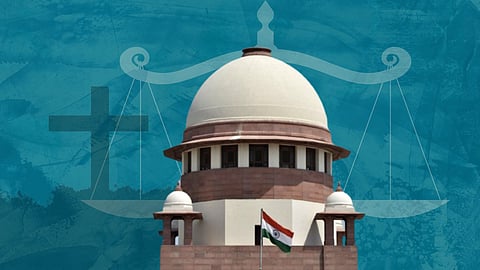

ON MARCH 24, the Supreme Court of India held that a person who has converted to Christianity cannot be recognised as a member of a Scheduled Caste. Upholding a decision by the Andhra Pradesh High Court, a two-judge bench of Justices Prashant Kumar Mishra and Manmohan clarified that Scheduled Caste status is legally contingent on professing Hinduism or any other religion explicitly recognised under the Constitution (Scheduled Castes) Order, 1950 (‘1950 Order’) and statutory protections tied to Scheduled Caste status cannot survive a religious identity that the law does not recognise within that category.
The tale of an assault
In December 2020, a Christian pastor Chinthada Anand, who belonged to the Madiga community, a Scheduled Caste, received abusive and threatening phone calls laced with caste-based slurs, allegedly in response to his religious activities and growing presence as a pastor.
On January 3, while leading a prayer gathering at a villager’s home, Anand was allegedly called outside by one of the accused, physically assaulted, abused by caste name, and warned against continuing such meetings. A few weeks later, Anand claimed that while returning home after prayers, he was stopped by a group that included the accused and several others, dragged, beaten, and publicly humiliated with caste-based abuse. He alleged that his belongings were snatched and the group passed threats of death and kidnapping against him and his family.
