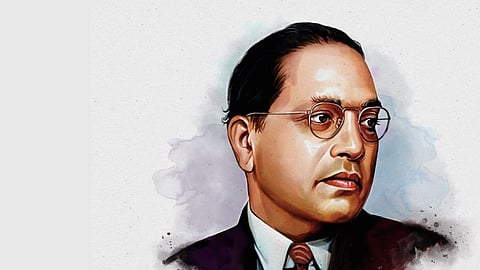

RAHUL GANDHI’S clarion call in Pune on August 22, urging thousands of girl students to smash patriarchy and reject the Manusmriti’s prescription of women’s subordination, echoes B.R. Ambedkar’s trenchant critique of Manu. Ambedkar held Manu responsible for the degradation of women in Indian society and for denying them freedom, independence and individual agency.
Ambedkar’s Indictment of Manusmriti’s Patriarchal Nature
Rahul’s bold and courageous rejection of Manusmriti for its sinister prescription that women during their lifetime have no independence and individual identity because during their childhood they are dependent on their fathers, in youth on husbands, and in old age on their sons captured the utterances of Ambedkar in his 1950 article, ‘The Rise and Fall of the Hindu Woman: Who Was Responsible for It?’ It forms part of Volume 17, Part II of the Writings and Speeches of B.R. Ambedkar.
Giving a detailed account of the high positions of women in the period prior to the advent of Manu, Ambedkar very convincingly explains their downfall and sub-human status primarily due to the law prescribed by Manu.
It is well documented fact of history that on December 25, 1927 Manusmriti was burnt by Ambedkar for its role in perpetuating untouchability and creating an inflexible caste hierarchy, which he described with anguish as “graded social inequality”, fostering in his words, a “descending order of contempt and ascending order of reverence.” One of the potent reasons behind his decision to consign Manusmriti to flames was due to the way it treated women in a highly derogatory manner robbing their freedom and independence.
In the aforementioned article of 1950, Ambedkar cites why Manu through his scriptural law laid down iron clad provisions to totally stifle freedom of women under any circumstances. Manu, according to Ambedkar, sacrifices the freedom of women and subjects them to men completely with the sole aim of safeguarding two families, their maternal families and the families to which they marry.
