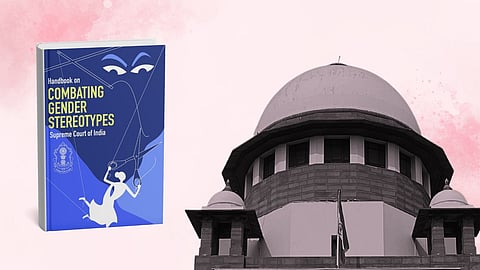

ON AUGUST 16, 2023, the Supreme Court, under the then Chief Justice of India (‘CJI’) D.Y. Chandrachud released a handbook on combating gender stereotypes, addressed to judges and the legal community. It was born out of the need for the Court to bind itself to standards it has declared essential to constitutional fidelity. It recognised that language, more than a mere communication tool, was also a sociopolitical indicator that reflects the prevailing attitudes and ethos of any society.
Advocacy, in particular, is a profession that is intrinsically linked to language. Language is used in mentioning, arguments, written submissions, and interactions with all stakeholders, including but not limited to victims and survivors. It shapes outcomes, influences how survivors are believed, and determines whether courts uphold their oath to decide cases without prejudice.
On Tuesday, CJI Surya Kant set aside a judgment of the Allahabad High Court, which had ruled “grabbing the breasts” and “loosening the pyjama string” of a survivor did not amount to an attempt to rape. While setting it aside, CJI Surya Kant criticised the handbook on gender stereotypes, which prescribed best practices to prevent harm due to sexist language, for being, in his words, “too Harvard-oriented”.
