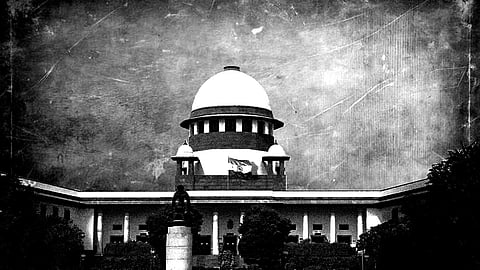
Judgment Summary: What the Supreme Court’s ruling on right to rehabilitation means for survivors of Commercial Sexual Exploitation

In its 298 page judgment late last month, the Court formulated safeguards against criminalisation of survivors under the Immoral Trafficking (Prevention) Act, while providing a detailed plan for their medical and legal assistance and reintegration into society.
Judgment Summary: What the Supreme Court’s ruling on right to rehabilitation means for survivors of Commercial Sexual Exploitation
Published on

ON MAY 29, 2026, the Supreme Court of India recognized the right to rehabilitation and treatment of the rescued victims of human trafficking and sexual exploitation guaranteed under Articles 21 and 23 of the Indian Constitution. Addressing the continuing legislative and policy vacuum affecting the fundamental right of trafficking victims, the Court exercised its powers under Articles 32 and 142 to frame comprehensive guidelines of ‘Victim Protection Plan’ for the authorities involved in rehabilitation, medical and legal assistance, and reintegration of survivors from the Commercial Sexual Exploitation (‘CSE’) activities. 

The Division Bench comprising Justices J.B. Pardiwala and R. Mahadevan held that victims are not merely entitled to be “rescued” but are also entitled to “meaningful rehabilitation”, and held that rather than treating victims as offenders, the authorities should adopt a victim friendly approach at every stage of intervention. The bench also addressed the status of voluntary sex workers in India, and emphasized that once it is established after careful enquiry that there are ‘no immediate safety risks or signs of coercion involved with the agency of the voluntary workers’, no unnecessary interference of the authorities is required. 

Background: A story of non-compliance

In 2004, a writ-petition was filed by an anti-trafficking NGO based out of Hyderabad before the Supreme Court highlighting several challenges in the anti-trafficking efforts undertaken in India, and sought directions for the Central and State governments to take appropriate steps to rehabilitate and treat survivors of the commercial sexual exploitation (CSE), particularly where rescued victims were being prosecuted as criminals under the existing Immoral Traffic (Prevention) Act, 1956 (‘ITPA’)

On October 30th, 2014, the Court referred to Vishal Jeet v. UOI (1990), wherein directions were issued to the Union and the State Government to establish ‘Central and State Advisory Committees’ for the rehabilitation and treatment of child victims rescued from human trafficking.  

Over the years, with multiple consultations between civil society organisations, and government agencies, a Joint-Proposal was prepared by the National Legal Service Authority of India (NALSA) and the petitioner on ‘Victim Protection Plan’ and was filed before the Court in 2006 outlining the necessary safeguards for the victims during the pre-rescue, rescue and post-rescue stages from human trafficking and commercial sexual activities. The Union Government later placed on record a “Draft Protocol for the pre-rescue, rescue and post-rescue operation of child victims of trafficking for commercial sexual exploitation”. 

The Division Bench comprising Justices J.B. Pardiwala and R. Mahadevan held that victims are not merely entitled to be “rescued” but are also entitled to “meaningful rehabilitation”.
Attachment
PDF
12.11.2024 order_ Prajwala v. UOI
Preview

In October 2015, the Court directed the constitution of an Inter-Ministerial Committee at the Union and State level to prepare a comprehensive legislation to deal with all aspects of human trafficking and the rehabilitation of the rescued victims. The Union Government undertook before the Supreme Court to establish an ‘Organised Crime Investigation Agency’ (‘OCIA’) with the Ministry of Home Affairs specifically designed to investigate the cases dealing with human trafficking and commercial sexual exploitation of women and children.

Thereafter, on December 9, 2015, the Court disposed of the original petition by taking on record the undertaking of the Union government with - (a) the creation of the OCIA; and (b) the constitution of an Inter-Ministerial Committee for the purpose of preparing a comprehensive legislation dealing with all aspects of human trafficking

As a result, several drafts of legislations dealing with Human Trafficking were prepared in 2016, 2017, 2018 and 2021. However, none of them culminated into a proper legislation. The Trafficking of Persons (Prevention, Protection and Rehabilitation) Bill, 2018 was passed by the Lok Sabha, but the same lapsed upon the dissolution of 16th Lok Sabha. 

On September 30, 2022, the petitioner filed a miscellaneous application seeking compliance of the December 2015 order. The case, then, witnessed a fundamental shift in the stance of the Union Government. As noted in an order passed on November 12, 2024, ASG Aishwarya Bhati submitted that in the aftermath of the amendment of National Investigation Act, 2008 (‘NIA Act’), in the year 2019, where Sections 370 and 370A of the Indian Penal Code, 1860 were added to the Schedule of the NIA Act, there was no need to constitute another agency in the form of OCIA to investigate the matters dealing with human trafficking.

Additionally, the government submitted that there already exists a comprehensive legal framework to combat trafficking, particularly, with the enactment of Bharatiya Nyaya Sanhita, 2023 (‘BNS’) incorporating Sections 111, 143 and 144 addressing the various aspects of trafficking, including organized crime and Section 396 of Bharatiya Nagarik Suraksha Sanhita, 2023 (‘BNSS’) which mandate the state governments to establish victim compensation scheme. 

How did the ruling rely on the Palermo Protocol?

In its May 29, 2026 judgment, the Court examined that the sex trafficking activities have moved beyond the traditional brothel, and red light areas are no longer the only centres for Commercial Sexual Exploitation activities. Rather there is a proliferation of exploitative material through digital platforms, including Cyber-Enabled Human Trafficking (‘CEHT’). 

The Court laid extensive reliance on the Palermo Protocol, a comprehensive legislative framework which laid down the measures to curb the human trafficking through 3P’s approach.

In an approach to advance the global standards for protecting the rights of victims from human trafficking and commercial sexual exploitation in the country, the Court laid extensive reliance on the Palermo Protocol, a comprehensive legislative framework which laid down the measures to curb the human trafficking through 3P’s approach – to prevent, punish, and punish the victims of trafficking and internationally recognized the human rights of the victims of the human trafficking and sexual exploitation.

Article 3 of the Protocol defines the ‘Trafficking in Persons’ with three cumulative elements of- 

  1. The Actions – covering recruitment and harboring the victims of commercially sexual exploitation activities and human trafficking; 

  2. The Means – using threat, coercion or abuse of power or taking advantage of victim’s position of vulnerability including poverty, social background, etc; 

  3. The Purpose – exploiting the victims for the purpose of sexual exploitation or forced labour; 

The Court also noted acknowledged the fundamental principle that where the consent or voluntariness of the victim is irrelevant, where the means deployed to achieve the consent was deceptive, coercive or unlawful, traffickers could not rely on the victim’s initial agreement as a legal defence. Relying on the Protocol, it also noted that in the case of children below 18 years of age, the ‘Means’ are not required for consideration while penalizing the conduct. It also relied on the ‘victim-centric’ response enshrined as per the Palermo Protocol.

Why did the Court emphasise on Rehabilitation as key to Article 21?

The Court further underscored the importance of Article 23 of the Constitution covering Prohibition of Traffic in Human Beings and Forced Labour as embodied in two declaration - (a) the prohibition of traffic in human beings; and (b) contravention of any such prohibition punishable in accordance with law.

Placing reliance on the judgment of People’s Union of Democratic Rights v. Union of India (1982), the Court observed that Article 23 is ‘wide and unlimited’ and unlike other fundamental rights, its enforceability rests against the whole world including the private citizens and not limited to the State power.

A key aspect of the judgment was the Court reading the right to rehabilitation in Article 21, noting that “one cannot absolutely enjoy their right to life if deprived of all basic needs including shelter, health services, education, employment options, psychological support, and protection from re-trafficking” (Notably, in Budhadev Karmaskar v. State of West Bengal (2022), the Supreme Court had recognized that sex workers are entitled to the same dignity and personal liberty protected by Article 21). It underscored that the State has a positive obligation to provide medical and legal aid to the survivors. It referred to its earlier judgment in Bandhua Mutki Morcha v. Union of India (1984) while re-affirming its stand on the rehabilitation of the survivors from the exploitative structures, identifying a three-fold duty while dealing with the victims to perform “(i) identification of victims, (ii) their rescue, and (iii) their rehabilitation”, and emphasized that “any rescue without rehabilitation is counterproductive.” 

The Court, then, noted that while the ITPA covered provisions related to rescue, protective homes, and corrective institutions, it treated the victims of commercial sexual exploitation as offenders rather than as survivors seeking right to rehabilitation. 

Section 2(f) of the ITPA, defines Prostitution as “the sexual exploitation or abuse of persons for commercial purposes”. The Court noted that the provision “caste a wide net over all those who profit from or facilitate the prostitution of others.” 

With respect to reformation and safeguards for the victims, Section 10A introduces a corrective institution as an alternative to the imprisonment of female offender/undertrials. While ITPA does not define the term ‘commercial’, the court understood the same from its usage in common parlance as, “for hire, whether in money or in kind”.

The Court also noted that the ITPA brought ‘voluntary prostitution’ and ‘sexual trafficking’ under one umbrella, the court noting that the term ‘trafficking’ is not defined under the Act. 

“It proceeds on the premise that all the prostitution is exploitative, and on that basis, criminalises all third parties involved in and all acts done in furtherance of prostitution, “the Court observed. It also noted that “a one-size-fits-all approach, applied to the heterogenous group of ‘victims of trafficking for CSE’, is unlikely to serve the interests properly.”

“It proceeds on the premise that all the prostitution is exploitative, and on that basis, criminalises all third parties involved in and all acts done in furtherance of prostitution”

What did the Court direct on Rehabilitation?

What stood at the forefront of the matter was the need for protecting the rights of trafficking victims. In light of the certain policies adopted by the Union and State governments, the court issued direction for creation of Anti-Human Trafficking Units (‘AHTU’), providing shelter homes and other protective centers, along with additional compensation to victims. Additionally, it directed that legal aid services should also be provided by organizations such as NALSA and state legal services authorities, and rehab programs run by the Ministry of Women and Child Development.

In exercise of its powers under Article 32 and 142, addressing the “lacunae in the existing legislative and policy measures”, the Court framed guidelines for the authorities to undertake “preventive, protective and rehabilitative measures” towards victims of commercial sexual exploitation and trafficking until the Parliament enacts a law to the effect.

Towards victims of commercial sexual exploitation and trafficking until the Parliament enacts a law- 

  1. The Court drew a distinction between “Commercial Sexual Trafficking” and “Prostitution”. Before categorizing each setting under the bracket of exploitation, the authorities must enquire “whether a person engaging in prostitution with or without consent.” 

  2. It laid down a ‘threshold inquiry’ under Section 17 of ITPA to identify voluntary sex workers, and exercise the principle of non-interference, sparing them from the machinery of long legislative process. Relying on Budhadev Karmaskar (2022), the Court issued directions pertaining for the police to refrain from ‘interfering’ and harassing adults voluntarily participating without the confluence of any third party. 

What is the Victim Protection Plan adopted by the Court?

The Supreme Court adopted the Victim Protection Plan (‘VPP’) jointly prepared by the NALSA and the petitioner. The framework draws critical phases of interference by the authorities - 

  1. The Victim Protection Plan, as formulated by the Court, centres around the idea of a survivor-friendly approach. It maps out the directions for authorities from the pre-rescue stage to meaningfully reintegrate the rescued victims into society. 

  2. During the pre-rescue phase, the police and investigators are obliged to conduct victim verification, collect information while exercising inter-agency coordination, and take appropriate steps to prevent any victimization of the rescued survivor. 

  3. The rescue phase mandates providing medical, and legal assistance, post acquiring his/her informed consent. And when required, psychological counselling should also be provided. 

  4. In the post-rescue phase, victims should be accorded rehabilitation with safe housing, education, vocational training, continuous and adequate financial assistance, safeguard measures against re-trafficking of the survivors.

The Court also noted that ITPA’s protection framework “strictly subscribes to an institutionalized, detention-based model”. The mandatory, fixed period of custody between 1 to - 3 years forced victims re-live their past traumas. Therefore, it is incumbent upon the authorities to seek alternate modes of rehabilitation, and employ designated means in re-integrating the survivors back into the society. 

The framework is built around- 

  1. Putting human rights of the victims at the centre while undertaking rehabilitative measures. 

  2. Avoiding the presumption of guilt under the ITPA against victims of commercial sexual exploitation.

  3. Ensuring that unless the authorities have sought the informed consent from the rescued persons, they cannot impose their safeguards in the form of care and protection, except in exceptional circumstances, upon finding that such consent is vitiated from external sources. 

  4. Strengthening of designated cells to treat the victims, i.e. Anti-Human Trafficking Units should be strengthened, providing victim-friendly protective homes, and conducting period audits should be conducted in order to ensure accountability and effective rehabilitation.  

The Court concluded by noting that the current legislative framework encompassing the ITPA, BNS and BNSS, the Juvenile Justice Act (Care and Protection of Children) Act, 2015, Prevention of Children from Sexual Offences (POCSO), 2012, and the NIA Act 2008 accounts for existing but scattered institutions and authorities to examine and investigate the cases dealing with human trafficking and commercial sexual exploitation activities. 

Therefore, issuance of writ for the constitution of OCIA was not required. However, the Union government was bestowed with the discretion to establish any such authority necessary and appropriate in the future. 

The Leaflet
theleaflet.in