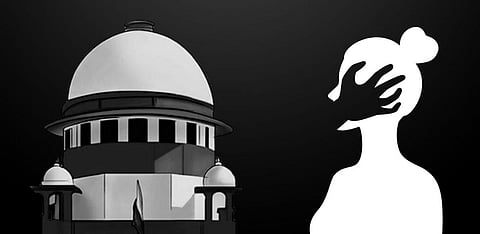

THE SUPREME COURT ON SEPTEMBER 15 refused to extend the scope of The Sexual Harassment of Women at Workplace (Prevention, Prohibition and Redressal) Act, 2013 (‘POSH Act, 2013’) to political parties. The decision, in my understanding, retreats from certain core tenets of how we must imagine justice. The bench led by Chief Justice of India B R Gavai stated that political parties are not employers, but ‘voluntary associations’, and their inclusion in POSH would open a ‘Pandora’s box’, inviting blackmail. The Court has passed the baton to the Parliament. However, the aftermath is clear, women remain unprotected in an arena in which they have assertively instrumentalised the best possible means of exercising and living democracy.
This view in Yogamaya M.G. v. State of Kerala & Ors. (2025) represents a departure from the historic verdict in Vishaka v. State of Rajasthan (1997) where the Court did not let the legislative silence undermine their ability to pass guidelines by recognising a woman’s right to a workplace that was safe and adherent of Articles 14, 15 and 21 of the Constitution.
Transposing the Vishakha and Yogamaya verdicts, the former of which sowed the seeds for the creation of the POSH Act, makes it clear that the latter refrains from any bold, purposive approach, preferring caution where urgency should have been exercised.
Political parties are entities which are not abstract in nature. They are organisations run in systematic hierarchies, powered by cadres and categories and sustained through tangible labour, often invisible and mostly by unpaid women who organise, mobilise and campaign religiously. To rule that these spaces are not workplaces is the denial of the obvious. Work is not always salaried. It is a structured activity carried out under authority, with some expectations. The specific exclusion of political parties gives enough vacuum for harassment to thrive unchecked, with women being left to navigate the danger without a remedy of an institutional recourse.
