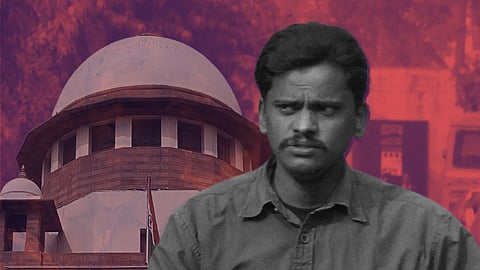

ON TUESDAY, THE SUPREME COURT set free Surendra Koli of the lone case in which he was sentenced to death in connection with the Nithari killings, which came to light with the discovery of skeletal remains of children from a drain behind businessman Moninder Singh Pandher’s house in Noida in 2006.
A three-judge Bench comprising Chief Justice of India (‘CJI’) B.R. Gavai and Justices Surya Kant and Vikram Nath passed this judgment in exercise of their curative jurisdiction, which the Supreme Court devised in Rupa Ashok Hurra v. Ashok Hurra (2002) to prevent any miscarriage of justice. Curative jurisdiction is invoked only after review has failed to correct a grave error.
The narrow issue before the Bench was whether two outcomes could be reconciled with each other when they had arrived on the same piece of evidence, namely, the so-called confessional statement under Section 164 of the Code of Criminal Procedure (‘CrPC’), given by Koli and so-called recoveries.
Acquittal in 12 cases, which laid the foundation for curative
The Nithari killings followed as many as thirteen trials against Koli and his employer Moninder Singh Pandher.
Before coming to the matter from which the curative petition had arisen, it is important to refer to 12 cases in which Koli was acquitted by the Allahabad High Court because it laid the foundation for Koli to file the curative petition.
