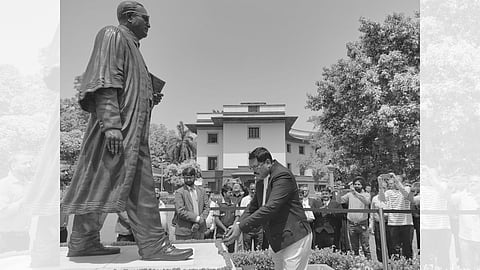

WHILE EVALUATING the tenure of outgoing Chief Justices of India (‘CJI’), one is constantly looking for the gold standard against which to match it. And unfortunately, in the past decade, I have been unable to find that gold standard. Tragically, but truly, we seem to be stuck in a situation where the new normal is a further decline in standards of independence and institutional integrity rather than an ascending standard towards a legacy of judicial independence, judicial integrity of the institution, and a lasting constitutional jurisprudence. The task of evaluating becomes painful.
Three chief justices of India have retired in quick succession of each other and it would be useful to look at their respective social backgrounds and “legacy”. The first of the three came from a Brahmin community - a dynasty judge - Justice D.Y. Chandrachud, the second came from a professional legacy - Justice Sanjiv Khanna - who as we all know was chosen out of turn to be the Chief Justice of India, and the third belonged to a Dalit community, Justice B.R. Gavai.
Looking for differences among the outgoing chief justices is normal and there are many differences between the three: some not so significant, some extraordinarily significant.
