
IMAGINE you are watching a court room drama on screen. A crucial witness is being examined. The defence lawyer is trying to elicit the truth from the witness, who is trying to deceive the court. You, as a spectator to the whole drama (and not just the court scenes), know what the lawyer should ask in order to corner the witness, who is deftly trying to avoid stating the whole truth. As an involved viewer you may feel frustrated, unable to aid the cause of truth and justice. But what if the whole drama is about you?
What if your fate - whether you will be thrown into the dungeon for the rest of your life or walk into freedom - were to be decided on the basis of what the lawyer is able to elicit from the witness giving deposition? If trials are going to be held by video conferencing and the accused is forced to remain a mute spectator confined in a prison unable to communicate with his lawyer during the trial, this is going to be an everyday occurrence in our courts.
Keeping up with transitions across institutions globally, courts are increasingly moving to a virtual or hybrid mode.However, these reforms cannot be at the cost of prejudicing the accused, who is entitled to fair trial.
The right to be represented by a counsel and the right to have consultations with the counsel are both fundamental rights guaranteed under Article 21 and 22 of the Constitution, and statutory right as outlined in the Code of Criminal Procedure, 1973 and the Bharatiya Nagarik Suraksha Sanhita, 2023. No defence will be meaningful and effective unless there is proper consultation between the defendant and his lawyer and the defendant gives proper instructions to the lawyer,
Let us take a look at the channels of communication available between a prisoner and his lawyer. Currently, there are four official channels of communication:
(i) Letters sent through post
(ii) Phone calls
(iii) Physical prison visit by the lawyer (Mulaqat) and
(iv) Virtual/E-Mulakat.
Unfortunately, none of these channels are secure and, therefore, fail to ensure the confidentiality of privileged communication between a lawyer and his client.
Prison staff invariably read letters, even scanning and sending them to investigation or other state agencies at times. Phone calls from prison are only for a few minutes and cannot be timed according to the lawyer’s convenience. Prison visits entail sacrificing half a day's work for a lawyer, which only few can afford to. E-Mulaqat suffers from similar problems.
Court visits for a prisoner, then, are crucial not only for the court proceedings, but because they provide an opportunity to communicate with the lawyer. It is in this context that, in April 2023, the Aurangabad Bench of Bombay High Court in Ganpat Baburao Kharat v. State of Maharashtra (2023) directed the Maharashtra government to build “sufficient number of transparent glass chambers in the court premises” to ensure that the undertrial prisoner has access to free and unintimidated professional communication with his lawyer.
Production of the prisoner at the time of extending remand
An arrested person is to be produced before a Magistrate within 24 hours. If the investigation exceeds 24 hours, the Magistrate, regardless of jurisdiction, has to remand the person to custody under Section 167 of CrPC (now Section 187 of BNSS). As long as they are in police custody, the person has to be produced physically each time. Production through video conferencing is allowed only for extension of judicial custody.
In September 2022, the Supreme Court in Jigar v. State of Gujarat (2023) ruled that production of the accused, either physically or through video linkage, is sine-qua-non of the power to extend remand as the accused has a right to oppose the prayer for extension of remand. In K. Anandan v. K. Manoharam (2014), when the accused was not produced before the Judicial Magistrate First Class, who had the jurisdiction, due to lack of escort, the Madras High court found the detention illegal since it was done mechanically without seeing the record.
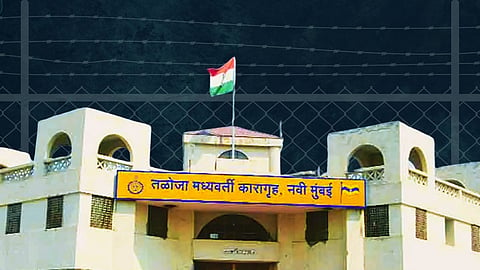
In an empirical study of a cross section of the prisoners in Taloja Central Prison, it was found that many of the undertrial prisoners ('UTPs') were never produced in the Court either physically or through video linkage since being remanded to judicial custody. The UTPs unanimously said that jail authorities cited the unavailability of escort guards for not being able to produce them in court.
The Bombay High Court observed in Mukesh Kumar Jagdish Yadav v. State of Maharashtra (2015) as follows: “If an accused has not been produced before the Magistrate for months while his detention is extended from time to time by mere endorsements indicating non-production of the accused for [want of] police guard, he would be entitled to bail, and his detention would be illegal.”
If the High Court were to walk the talk and actually release all such UTPs whose remands have been extended routinely without production (either physically or through Video linkage), we can say confidently that the number of UTPs detained at Taloja Central Prison would reduce from the current 2,500 to a handful.
In our sample data set of 305 respondents, we found that 36 were never produced either physically or through video linkage after being sent to judicial remand, which is more than 10 percent of the sample set.
Out of these 36, 14 had spent more than 24 months in custody, 13 between 12 and 24 months, and the remaining 9 less than 12 months. If we go by the Bombay High Court’s verdict, the custody of all these 36 UTPs is illegal and they deserve to be immediately released.
This is not to imply that other UTPs have been produced in the court - be it physically or through video linkage, regularly. On an average, we could see that a UTP is produced once in six months to one year.
Section 309 of CrPC (now Section 346 of BNSS) envisages that, once the investigation is completed and the chargesheet has been filed, the case proceed to trial without delay.. It also assumes that the trial will be conducted on a day-to-day basis. Postponement of the commencement of the trial or adjournment of proceedings is an exception rather than the rule, and the reasons for the same have to be recorded.
As per Explanation I of Section 309, a reasonable ground for extending the remand is,
“If sufficient evidence has been obtained to raise suspicion that the accused may have committed an offence, and it appears likely that further evidence may be obtained by a remand"
How often do we see the conjoined clauses being given due consideration? It is not prima facie guilt alone, but prima facie guilt coupled with the likelihood of obtaining further evidence that is deemed to be a reasonable ground for extending remand. Unfortunately, in practice, remand gets extended mechanically.
While Section 309 of the CrPC sets a limit on the period for extending the remand to fifteen days at a stretch for only the Magistrate , Section 346 of BNSS has a fifteen day limit on extension at one stretch, which is applicable to the ‘Court'. Such a restriction should at least put an end to the practice of courts remanding accused to custody and forgetting about them. In Jahid alias Javed Liyakat Ansari v. State of Maharashtra (2023), Justice Bharati Dangre of the Bombay High Court expressed this apprehension as he observed:
“With a heavy heart and with great regret, I must note that the judicial system has probably forgotten about this Applicant, as he has not been produced before the Court and despite his arrest some five years back, the Court has not even bothered to frame the charge".
The judicial system has forgotten scores of such prisoners. They come from extremely underprivileged backgrounds, lacking a support system of friends or family, and the resources to hire expensive lawyers who could raise their issue in a constitutional court.
Producing a UTP in court gives them an opportunity to raise grievances against the prison authorities or other inmates. Prison rules are stringent as they are meant for convicts. When a UTP has a special need (including basic needs such as access to proper clothing, medical treatment or stationery and reading material) they have to turn to the remand judge/magistrate to give them relief. Prison authorities routinely turn down such requests.
Production at the time of the trial
Increasingly, trials are being conducted in the absence of the accused, or the accused being present only through video linkage. While collecting the data, fellow prisoners told the research team that some judges, also, are not particular about the accused being produced before them even when evidence is being recorded. When the accused person complains to the judge about not being produced in court, judges often tell them that their presence is not needed since they are being represented by lawyers.
The CrPC and BNSS clearly lay down the law pertaining to recording of evidence in the presence of the accused. In Shaikh Abdul Naeem v. State of Maharashtra (2019), a Division Bench of the Bombay High Court observed:
“If these provisions are borne in mind, it is evident that by the sheer language, the Court is obliged to ensure that a trial is conducted fairly. and in the presence of the accused the evidence is taken. It is very vital for the accused to know and particularly when the depositions of the prosecution witnesses are recorded that the details thereof are appreciated either by the accused himself if he is familiar with the language of the court or through his pleader. At the time of cross-examination of witnesses, the accused can give timely suggestions or offer his views to the pleader and through him a cross examination as effective as possible for his defence can be conducted. How the evidence has to be recorded, what is the procedure to be followed in the event the language of recording of the evidence is not the language of the Court are then matters covered by section 278 sand sections 278 and 279 reserve a crucial right of the accused, namely, that whenever evidence is given in language not understood by the accused and, if he is present in Court in person, it shall be interpreted to him in open court in a language understood by him. We do not think that any of the orders passed by this Court can ever be read as substituting the mandate of the Code of Criminal Procedure or the Constitution of India. If Article 14 guarantees equality before Law and equal protection of law and Article 21 preserves and protects the life and liberty of every person, then, we do not think that there is anything in the orders of this Court which would suggest that the guarantees surrendered or capable of being surrendered or waived.”
It is clear that the accused cannot be dispensed with due to arbitrary and flimsy reasons. Under Government Regulations dated July 12, 2004and July 15, 2011, 239 police guards are reserved at Navi Mumbai’s police headquarter to escort prisoners from Taloja prison to courts and hospitals. The reality, however, is that not even 50 guards are allotted for escorting prisoners on any given day. The usual excuse given by the Commissionerate of Police, Navi Mumbai is that guards are deployed for other duties like providing security for VIP/VVIPs, or for festivals, political rallies, cricket matches, and so on. Some of these communications from the CP, obtained through Right to Information applications, were annexed to a writ filed in the Bombay High Court by one of the authors.
Courts have repeatedly reiterated that non-production of the accused in courts is a serious issue, which has to be addressed on priority as it not only prejudices the accused, but also causes enormous delays in the trial.. In Mohd. Javed Noor Hasan Khan v. State of Maharashtra (2015), and Suresh Maruti Kamble v. State of Maharashtra (2015), the Bombay High Court dismissed the justification of accused not being produced due to unavailability of adequate police force. In Javed Noor, the High Court noted that production through video conferencing while recording of evidence should not be done as there "would be a lot of difference between the actual physical presence in the court when the recording of evidence is going on and the presence through video conferencing.”.
In Kishan Pandurang Mazgaonkar vs. State of Maharashtra the High Court noted that the presence of the accused at the time of recording evidence "would be necessary to facilitate instructions to be given to his lawyer who is appearing for him in the said case, so that there is an effective representative of the accused at the time of the trial,”. It went on to state that "recording of evidence by Video Conferencing would have the effect of impinging upon the aspect of fair trial.
In Anil Hanmant Bhosale v. State of Maharashtra (2005) the trial was set aside and matter remitted back to the trial court as the trial was conducted in the absence of the accused, causing grave injustice to them.
In State of Maharashtra v. Pravin Popat Kharchand (2018), the Court distinguished between recording the statement of the witness via video linkage and having the accused on video linkage. In State of Maharashtra v. Mohd Ajmal Mohd. Amir Kasab @ Abu Majahid (Confirmation Case No. 2) (2010), the court acceded to hearing the accused on video linkage owing to "security hazard" and "great threat perception". In State of Maharashtra v. Dr Praful B Desai (2003),the statement of the witness, who was willing to depose, but unwilling to come to India to depose, was allowed.
Quite often, we see that there is a failure to distinguish between the use of electronic means as an enabling provision, when lawyers are allowed to argue or witnesses are allowed to depose through video conferencing. This causes prejudice to the accused, reducing them to a mute spectator in the trial.
According to the Supreme Court, the object of Section 313 of CrPC (now Section 351 of “is to establish a direct dialogue between the court and the accused". The Court has also noted that the attention of the accused is to be drawn to "every inculpatory material so as to enable him to explain it" . Thus, the accused is supposed to provide explanation for the incriminating material.
However, during our empirical study, we came across several cases where the accused were produced for the first time in the Court and then asked to give their response to the questions. This means they had no inkling about the evidence against them and were absent while it was being recorded. They had no opportunity to discuss with their lawyers before their responses were recorded.
What is disconcerting in such cases is also that invariably, the lawyers are appointed by the court availing the Legal Aid Cell’s services. The lawyers would never have interacted with their clients.
One accused, serving a ten year sentence, had even been forced to sign a pre-prepared statement, under duress. He e did not agree with the statement since it was contrary to the factum of the matter. In case of another accused, the whole trial occurred in their absence, even as they are yet to see their lawyer. Eventhough they have been told that their statement under Section 313 will be recorded through video conferencing, the legal aid lawyer is yet to make any attempt to have a discussion with them. The accused, who has survived two heart attacks and undergone angioplasty while in custody, is distressed about the eventual outcome of his case.
The presence of the accused in the Court can be dispensed with as per these provisions:
There are no other provisions to dispense the presence of an accused during trial. Section 273 of CrPC (now Section 308 of BNSS) does not provide for dispensing with the presence of the accused. It only talks about recording the evidence in the presence of the advocate of the accused when the presence of the accused is dispensed with. The provision also deals with “recording evidence through audio-video electronic means of the designated places to [notified] by the State Government". In a plain reading, this means that the witness can go to the designated place and have through video linkage.
Doing away with the presence of the accused in court without valid reason violates procedure established by law. Lack of escort personnel is certainly not a justification permitted in either the old or the new procedural law.
Introduction of electronic means should enable the administration of justice, not deprive the accused of his right to equality before law and a fair trial. When the prosecution has all the means and the wherewithal to have unlimited discussions and consultations, and the accused is made a mute spectator, it cannot be considered a fair trial. Equality before law is violated. Rule 8.3 of High Court of Bombay Rules for Video Conferencing for Courts 2022, States that where the person being examined, or the accused to be tried, is in custody, the statement or testimony may be recorded through video conferencing. The Court shall provide adequate opportunity to the under trial prisoner to consult in privacy with their counsel before, during and after the video conferencing.
Further, Rule 12.8 emphasizes that the "Court shall ensure that the defense of the accused is not prejudiced in any manner and that the safeguards contained in Rule 8.3 are observed.” While reviewing the video conferencing rules adopted by the Patna High Court (substantially similar to the Bombay HC’s rules) the Supreme Court noted that it is “only appropriate that the accused be produced before a court, rather than marking his appearance through video conferencing - latter is exception”