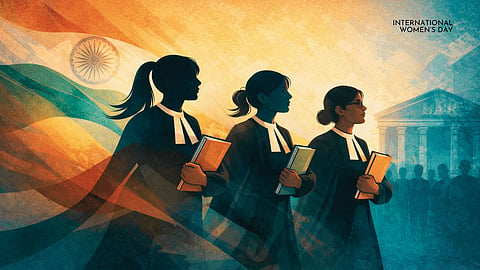

THE YEARS SPENT IN COURTROOMS have helped me realise the difference between what the law says and what institutions actually do. The legal profession in India speaks fluently about equality. It writes it into petitions, argues it before benches, and invokes it in closing statements. What it has been far less willing to do is practise it internally.
This year, the elections to the Bar Council of Delhi witnessed an unusually high participation by women advocates. The surge follows a series of judicial interventions mandating reservations for women in Bar Associations. I will not pretend this happened organically. It did not. It happened because women went to court to make it happen.
Women constitute almost half of India’s population, yet their representation in the institutions of law continues to be a matter of concern. More than seven decades after independence, the number of women judges in the Supreme Court of India have accounted for only about 3.83 percent of all judges who have served on the Court. Today, out of a sanctioned strength of thirty-four judges, there is only one woman who is also expected to become India’s first woman Chief Justice.
