Does Nicolás Maduro enjoy Head of State immunity? Here’s what International Law tells us

The US’s Venezuela operation violates core obligations of the UN Charter, from use of force and aggression, to self defence and territorial sovereignty.
Does Nicolás Maduro enjoy Head of State immunity? Here’s what International Law tells us
Published on

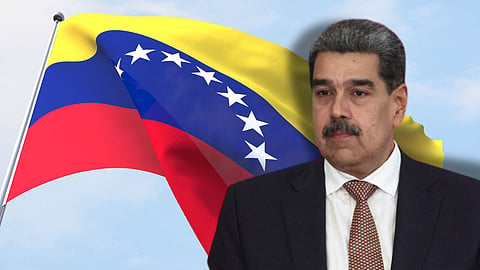
ON JANUARY 3, 2025, the United States (U.S) launched an unprecedented military strike in Venezuela targeting the capital city Caracas and kidnapping the president Nicolás Maduro and his wife Cilia Flores. The operation, referred to as ‘Absolute Resolve’, reported a death toll of eighty civilians and Venezuelan security forces. The operation follows the U.S measures to block the Oil tankers entering and leaving Venezuela for alleged drug and human trafficking.   

Politically, the aftermath of the attack witnessed mixed reactions from the nation states, reflecting a larger geopolitical fracture. United Nations Secretary-General Antonio Guterres termed the event unprecedented and called for respect from all stakeholders. The Chinese Foreign Ministry condemned the use of force by the U.S. against a sovereign country. Meanwhile, Israeli Prime Minister Benjamin Netanyahu congratulated Trump for bold and historic leadership. Unsurprisingly, several Western states took a neutral stance, such as the Danish prime minister, Mette Frederiksen, who called for de-escalation. India adopted a cautious approach, calling for dialogue to ensure peace and stability in the region. 

Legally, the attack opens a Pandora’s box of international law obligations, which are alleged to be violated on the one hand and complied with on the other hand. Claims and counterclaims include the use of force, non-recognition of the government's legitimacy, self-defence, law enforcement, state responsibility, sovereignty, and much more. 

A major flashpoint is the immunity of Nicolas Maduro as Head of State and its implications with respect to his arrest and indictment. The U.S position can be compared to the indictment and the subsequent arrest of the de facto leader of Panama Manual Noriega, in 1988, for drug trafficking and racketeering. The district court had found that Noriega was not entitled to Head of State immunity because, “the United States government has never accorded Noriega Head of State status but rather continued to recognise President Eric Arturo Delvalle as the legitimate leader of Panama while Noriega was in power.” 

Legally, the attack opens a Pandora’s box of international law obligations, which are alleged to be violated on the one hand and complied with on the other hand.

Broadly, the granting of immunity, according to the U.S, is an executive act which can be withheld by any claimant. A similar argument was placed by Attorney General Barr in 2020 on charges of drug trafficking and corruption against Maduro. In a sense, in the past, the U.S has dealt with the Head of State of immunity as a domestic act. Yet, Maduro’s case stands at the crossroads of domestic and international law with respect to prosecuting a foreign Head of State. This post argues that head of State immunity is absolute without exception, thus Maduro enjoys immunity from foreign criminal jurisdiction in the U.S.  

Head of State Immunity in International Law

Although there is no binding universal convention regulating the immunity of the Head of State, there is broad consensus under customary international law that the serving head of State enjoys absolute immunity (ratione personae) for official and private acts. This is underscored in Article 3 of the ILC Draft Article on the Immunity of State Officials from Foreign Criminal Jurisdiction.  Even after a State official leave their official position, the immunity for the official acts subsists (ratione materiae). 

The category of persons who qualify as the Head of State is determined by domestic law. This implies that an acting Head of State cannot be arrested in a foreign jurisdiction. For instance, in the Arrest Warrant case (2002), the International Court of Justice (‘ICJ’) observed: 

“[f]unctions of a Minister for Foreign Affairs are such that, throughout the duration of his or her office, he or she, when abroad, enjoys full immunity from criminal jurisdiction and inviolability. That immunity and that inviolability protect the individual concerned against any act of authority of another State which would hinder him in the performance of his or her duties.”  

Does Nicolás Maduro enjoy Head of State immunity? Here’s what International Law tells us
Blockade, aggression, and jus cogens: Why Trump’s restriction on Venezuela’s oil tankers tests the limits of international law

Although the ICJ determined immunity in the context of the foreign minister, the reasoning could be concomitantly extended to the Head of State.  Considering Maduro is the sitting Head of State, he enjoys absolute immunity. Further, immunity confers on the Head of State the privilege to represent the State without producing full powers under Article 7 of the Vienna Convention on the Law of Treaties (‘VCLT’) and inviolability in terms of protection from injury. 

Even if the U.S does not recognise Maduro’s legitimacy, rationae materiae immunity would subsist for acts committed as a former Head of State. However, these immunities do not apply before the International Criminal Court. 

Moreover, Venezuela is a party to the Rome Statute. It is therefore bound by the provisions of the Rome Statute. Specifically, Article 27 of the Rome Statute  reads: 

“…official capacity as a Head of State or Government, a member of a Government or parliament, an elected representative or a government official shall in no case exempt a person from criminal responsibility…” 

Interestingly, on June 27, 2023, the Pre-Trial Chamber authorised the prosecutor to continue its investigation into crimes against humanity. The Venezuelan government appealed against the decision, but the appeal was rejected. 

Firstly, under international law, both the Foreign Minister and Head of State enjoy absolute immunity, which the U.S courts must take into consideration.

Does Maduro enjoy Head of State Immunity?

Nicolas Maduro was a former bus driver and trade union leader before entering Venezuelan politics. From 2006-2013, he served as the Foreign Minister and took over the presidency of the country after the demise of the late president Hugo Chavez. 

Firstly, under international law, both the Foreign Minister and Head of State enjoy absolute immunity, which the U.S courts must take into consideration. However, the U.S may contend, as it did previously with Noriega, that Maduro is not recognised as the legitimate leader of Venezuela. Accordingly, the Court, in the words of international law scholar Oona Hathaway, may defer the matter to the executive branch of the government to determine whether Maduro is the Head of State. 

This argument can be deeply problematic as recognition of government is a political act, which does not alter the legal right linked with the State, like territorial integrity and sovereignty. As analyst Edmarverson A. Santos notes,“International law distinguishes between the state, which remains a subject of international law regardless of recognition disputes, and the government, whose recognition may vary among states.” 

Therefore, immunity operates with the legal template of sovereign equality and is not dependent on the recognition by third StatesThus, a domestic Court interpreting immunity restrictively could destabilise the fabric of the international legal order by politicising immunity.  

Secondly, immunity of the Head of State is recognised as customary international law, which binds the State. Customary international law is proved through State practice (general and consistent behaviour) and opinio juris (a belief that practice is legally required). The practice can be derived from the decision of Courts. For instance the Cour de Cassation, France’s highest court, had to decide on the exception to immunity against Muammar Gaddafi for complicity in the bombing of the DC 10 aircraft which resulted in the death of several French nationals. The Court, in that case, held that “international custom precludes practising heads of state from being able, in the absence of contrary international provisions binding on the parties concerned, to be prosecuted before the criminal courts of a foreign State.” 

Further, States like Spain and Belgium have narrowed universal jurisdiction for foreign officials claiming immunity. This domestic practice also finds support in international judicial practice. For instance, he ICJ in the Arrest Warrant case, attempted to identify exceptions to immunity, but concluded it was unable to identify this from State practice. Additionally, the executive conduct indicates the practice of States refraining from arresting a Head of State, which can be deciphered from States' reluctance to arrest Gaddafi, Vladimir Putin, and Omar al-Bashir. 

Thirdly, as per Article 3 of the ILC Draft Articles on State Responsibility (Article 3), “the characterization of an act of a State as internationally wrongful is governed by international law. The characterization is not affected by the characterization of the same act as lawful by internal law.” Hence, the act of arresting Maduro may be lawful under the domestic law of the U.S, but may still constitute a wrongful act under international law. Thereby the U.S. would have an obligation for reparation, which may include the cessation of the wrongful act. 

Does Nicolás Maduro enjoy Head of State immunity? Here’s what International Law tells us
Some insights from the US strikes in Iran: Aggression and the limits of self-defence

This is further strengthened by the fact that the U.S recognises customary international law as part of U.S. law and therefore must be applied by U.S. courts, even without specific treaties or statutes. Here, a parallel can be drawn to the La Grand case (Germany v. United States) in 2001, where the breach involved consular access. In the said case, the U.S invoked its domestic rule of ‘procedural default’ to block consular access. The ICJ stated, “The problem arises when the procedural default rule does not allow the detained individual to challenge a conviction and sentence by claiming, in reliance on Article 36, paragraph 1, of the Convention.”  

Although the U.S did not comply with the observations of the ICJ citing its domestic law, that does not negate the fact that it was in breach of its international law obligations. 

US’s actions violate core principles of the UN

Notwithstanding the several allegations of human rights violations, drug trafficking, and corruption under Maduro’s regime, it does not legitimize or preclude the act of the United States in the territory of a third State. The violations of the core principles of the UN Charter, like the use of force, aggression, self-defence, and territorial sovereignty are grave because of their jus cogens nature and set a dangerous precedent.  

If the Courts in the U.S fail to recognise the Head of State immunity, which is unequivocally absolute, this would be a further blow to rule based international order and embolden Trump’s expansionist plans. 

Related Stories

No stories found.
The Leaflet
theleaflet.in