A Quarter Millenium into American Democracy

With all its deep imperfections around affordability and foreign policy, America – a nation built by immigrants – has sustained a constitutional structure that has securely housed democracy for two and a half centuries.
A Quarter Millenium into American Democracy
Published on

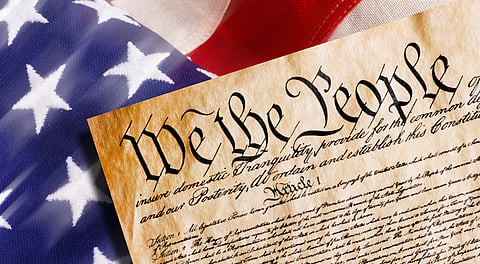
AMERICAN DEMOCRACY remains robust as it marked its remarkable 250-year commitment to the  ideal of self-government earlier this month. This endurance is not merely a matter of administrative convenience,  but a testament to a nation that has projected itself as placing human dignity at the epicenter of the democratic experiment. It has sustained a constitutional structure that has securely housed democracy for two and a half centuries. 

Celebrating this milestone is not a license for erasure of historical wrongs committed in the nation’s name. Rather, it serves as an acknowledgment that the citizenry is free enough today to confront those failures, learn from them, and chart a more hopeful course. It offers a moment  to reflect on the crucial strides American democracy has made. Indeed, the nation's finest  moments have defined the expansion of the foundational principles captured in the Declaration  of Independence. The document emphatically claims these truths as "self-evident," asserting  that all people are endowed with certain "unalienable rights"—chief among them, "Life, Liberty  and the pursuit of Happiness." 

Despite the deep imperfections of the men who drafted and ratified this text, successive  generations of Americans have kept the democratic flame alive. While the light has fluttered  numerous times, the public has not let it extinguish. The founders possessed a universal vision  but limited it to a privileged few, excluding women and people of color. Yet, even in securing these rights restrictively, they engineered a structure of self-government that was destined for  universal application. The constitutional separation of powers has allowed American democracy  to rebound time and again, providing movements the legal and political pathways to effect change. 

While the Civil War exposed the limitations of always achieving such progress nonviolently, it  was a democratically elected president, Abraham Lincoln, who preserved the Union and abolished slavery. In the centuries since, the United States has continually expanded its circle of  inclusion through nonviolent movements, from women’s suffrage and African-American civil  rights to disability and gender advocacy. Even today that work continues with vigor. Democracy has never been seen as a solved problem but seen as the method to solve problems. 

Despite the deep imperfections of the men who drafted and ratified this text, successive  generations of Americans have kept the democratic flame alive.

The American economic model has constantly tested American democracy. The social safety  nets that the rest of the developed world takes for granted have been glaringly fragile for Americans. Millions of Americans still go to bed without any health coverage. American higher  education has got out of reach for the average family. Affordability has emerged as the defining  issue for this generation of Americans who find their futures uncertain. This has led to a  remarkable convergence between the right and the left. While self-proclaimed nativism holds an  unfortunate sway over parts of the right, the vast majority of the country living paycheck to paycheck, if they even have a paycheck, is demanding a politics that addresses their struggles.  Four out of ten kids in America over the past decade, across the Biden and Trump administrations, were effectively born in poverty with their births financed by Medicaid, the government  insurance program for the poorest. 

While the word dignity is not explicitly in the founding documents, life, liberty and the pursuit  of happiness sums up what makes a life dignified. Social participation in a democracy that denies a dignified living is an inadequate commitment to the Declaration’s creed. The emerging leadership of America is taking the mantle of the Declaration and making the case of economic inclusion through this rallying around affordability. The natural evolution of American dignity today demands its leaders to address the affordability crisis by reimagining capitalism that has fallen short of its own promise of prosperity. 

It is legitimate for the world to judge American democracy through the lens of its foreign policy.  The American record is checkered to be generous. But to see that as America’s totality is missing what the world can actually learn from its evolutionary story with its ups and downs.  Using a sports metaphor, we love our champions not just for winning but their resilience after they’ve been defeated. Some of the loudest criticisms of American foreign policy have often come from its youth. Their passion for democracy and human dignity has been a constant source of self-correction albeit partial in some instances.  

In a nation built by immigrants, their recent targeting attempts to erode the founding principles but the people’s response has been steadfast.

In a nation built by immigrants, their recent targeting attempts to erode the founding principles but the people’s response has been steadfast. Just look at the roster of candidates gaining traction in local and state elections – filled with immigrants from every corner of the globe. Americans don’t back down when they feel their democracy is in duress, they stand up to heal  it. American patriotism is stronger than its nationalism and that’s a testament to the creed that  places the people and their communities at the center of public life, not imagined enemies. Yes, American society is not immune to dehumanization and the chorus of those voices has grown  louder but Americans are responding by exercising what the founders put in place. They are  reinvesting in their democracy through their activism and votes and in the process deepening its  roots for the next 250 years. 

For more than three decades now I’ve been a policy advocate because I am the descendant of Indian freedom fighters. They too laid the foundation of a nation that aspired to ensure the dignity of all its people through self-government. I have found policy to be my calling – working  on drafting it, working on mobilizing people and challenging elected leaders to fulfil their oaths, both in India and the United States. So, when my daughter, Sarea, the great grand-daughter of freedom fighters from Uttar Pradesh, volunteered for the winning Maryland state senate campaign of Amar  Mukunda, whose great grandfather was a freedom fighter from Karnataka, it was a moment of deep reflection. Two incredible democratic traditions had fully meshed. 

The American mosaic should inspire the world. Give it a second look.

The Leaflet
theleaflet.in