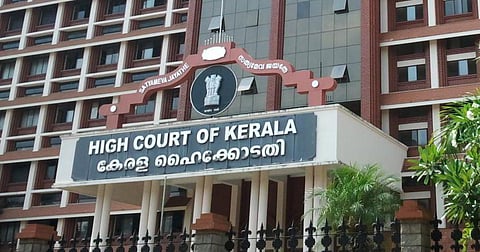

THE JUDGEMENT OF THE Kerala High Court on September 28 this year shows the half-baked approach of the judiciary towards the invocation of the Patents Act (Section 100) by the Government. This judgement came on a petition filed in June 2022 by a retired bank employee with metastatic HR Positive HER2 Negative breast cancer, to compel the Union of India to act on ribociclib (a patented medicine).
For a 21-day course of treatment of ribociclib, the petitioner had to pay Rs 58,140 while her monthly pension was Rs 28,400. She sought a direction from the court to the Central Government to invoke Section 100 which allows the Central Government, or any person it authorises in writing, to use a patented invention “for the purposes of Government”. Reading subsections (4) and (6) of Section 100 together with Articles 21 and 47, the court held that the Centre may authorise making, using or vending a patented medicine and sell the product on a non-commercial basis to a purchaser—including a needy patient.
Tragically the petitioner passed away while her petition was pending. The Court continued the case suo motu, as In Re Exorbitant Pricing of Life Saving Patented Medicines (WP(C) No 18999 of 2022). Then, on September 28, 2026, the court held that Section 100 “is required to be invoked” where a patented medicine is sold at an exorbitant price. However, it then disposed of the petition with findings providing, among others, no deadline, no test of what “exorbitant” means. The Court has reasoned well but it failed to provide a relief based on logical reasoning.
The court read Section 100(4) and (6) with Article 47 of the Constitution, the State’s duty to improve public health, and the 2002 Lok Sabha debates in connection with the Patent (Amendment) Bill, 2002. When certain apprehensions were raised by the Parliamentarians, it was clarified that under the provisions of Section 100 of the Act, the Government can use the patent at any time “in the interest of the public health system”. It was further clarified that the Government can “procure it and sell it to the hospitals or they can give it to third parties”. The Court thus held that “purposes of Government” include making the patented medicine and selling it to patients. It also rejects the claim that Palbociclib, which is available from the generic manufacturers, is an interchangeable substitute that removes the need to act.
Further, the Court also rejects the arguments of the patent holders and the government that Section 100 cannot be used to address situations like exorbitant prices. In this regard, the Court states: “this Court is of the opinion that the provisions of Section 100 of the Act are required to be invoked in circumstances where the Government is required to intervene, such as when the medicine is unaffordable on account of its exorbitant price”.
After these declarations, the direction of the Court to the government reads: “The Government requires to collate the required data and arrive at a decision as to whether a particular medicine is affordable or not and, on that basis, proceed in accordance with Section 100 of the Act, if found necessary”. This direction reinforces the status quo and denies justice to HR Positive HER2 Negative breast cancer patients.
As explained below, the Court ignored the basic evidence brought before it by the amicus as well as various documents presented by various respondents, including a breast cancer patient who has been taking ribociclib. Ignoring the material fact of the exorbitant price and asking for an assessment would result in the continuance of the status quo.
Further, the direction does not mention any timeline for completing the assessment with regard to affordability. In the absence of such a timeline, the government, which earlier rejected the representation for the invocation of Section 100, gets a long rope and, hence, a delayed decision.
Further, the direction does not provide any explanation of the words “required data” to assess affordability. However, para 42 of the judgement states: “ … this Court is of the opinion that the required data to decide whether the particular medicines in question are affordable or not, has not been brought on record. The data requires to be collected by the Government, as to the actual number of persons affected with the particular type of cancer, the number of patients consuming the medicines in question, the cases where such medicines are not consumed by patients on account of the alleged exorbitant price, etc., by collecting such details from the hospitals across the country”.
Since such data does not exist in the public domain and would require a mammoth exercise to complete the data collection, the affordability assessment could not even be completed prior to the expiry of the patent, i.e., August 2029.
The petitioner’s representation of January 10, 2022, expressly sought “government use authorization under section 100”. The Department for Promotion of Industry and Internal Trade (DPIIT), directed by the Court to pass a reasoned order, replied on October 7, 2022, with several paragraphs refusing a compulsory licence under Section 92 and one sentence on Section 100: the issue was “non-est” because the Health Ministry and the Department of Pharmaceuticals “have not made any request”.
Yet Section 100(1) vests the power in “the Central Government”, and nothing in Chapter XVII of the Act makes a referral from a user department a precondition. The judgment records the parties’ positions on that order and evaluates none of them. Reconsideration under the correct standard required no quashing, and the Court considered that it could direct the Government.
The Court’s order therefore stands as the executive’s last word on ribociclib, and the Union can plausibly claim it has already done what the Court asks in its judgment.
The Court then finds that affordability data “has not been brought on record” (para 42). However, the record shows otherwise specifically the inability of most patients to pay high cost for medicines :
a parliamentary committee's finding that about 40% of cancer hospitalisations are financed mainly through borrowing, asset sales and contributions from friends and relatives; and
the Union's own order of 7 October 2022, quoting the National Cancer Institute, Jhajjar, on ribociclib and palbociclib alike as “expensive in the range of Rs 58-75000” rupees a month.
Further, on April 5, 2023, the Court directed the Ministry of Health and Family Welfare to collect the Indian Council of Medical Research’s breast cancer data and report within a month. No report came. The judgment omits that direction and so faults the record for a gap the Union was ordered to fill.
Further, the reasons given for restraint do not hold. Para 38 warns that without “such sanctity” “no one will come forward to register their patent”, but cites no evidence; para 35 itself calls a patent “subject to the right of the Government to promote public health”.
Arguably, the reason for the direction might have come from Para 39 of the judgment, which states: “for the Central Government to consider whether Section 100 of the Act requires to be invoked”, as “a policy decision”, and adds “if found necessary”. The amicus curiae argued that “may” in Section 100(1) must be read as “shall”. The judgment records the argument and does not answer it.
Most importantly, since the writ is disposed of and the Court has not asked the government to report the result of the affordability assessment, affected parties like patients have no option but to file another writ petition, which would result in delay in getting justice.
Conclusion
The judgment will be cited for what it declares: that “purposes of Government” in Section 100 extend to making a patented medicine and supplying it to patients. Further, exorbitant pricing is a circumstance in which the provision is “required to be invoked”. This reading defeats the argument, pressed by the patentee and the Union alike that government use has nothing to say about price. And thus, bringing the Act into line with the position of Agreement on Trade-Related Aspects of Intellectual Property Rights (TRIPS) Article 31 and paragraph 5(b) of the Doha Declaration.
Nevertheless, a declaration that binds no one to act is, for the patient, indistinguishable from a dismissal. Having found that the power exists and that the circumstance triggers it, the Court returned the question to the same executive that disposed of it in one sentence in October 2022. It instructed the executive with a data exercise which the Union had already failed to carry out once at the Court's own direction. Further, the judgement, attached with no timeline, no report required, and leaving the question whether "may" in Section 100(1) carries a duty unanswered. The likely result is an affordability assessment that outlasts the patent, and a 2022 order that remains the executive's operative answer on ribociclib.
The petitioner who brought this case did not live to see its end; the judgment ensures that others in her position will also wait, especially Adv Majida, who impleaded in the petition. What the case required was modest and within the writ jurisdiction: a direction to reconsider the 7 October 2022 order under the correct legal standard, a time-bound assessment grounded in the record already before the Court, and retention of the matter under continuing mandamus. Without these, the reasoning in In Re Exorbitant Pricing becomes material for the next petition rather than relief in this one: useful to advocates, cold comfort to patients. The burden now falls on patient groups to hold the Central Government to the Court's own premise, and to make it explain on the record why a power the Court has held must be invoked in exactly these circumstances should still go unused.
