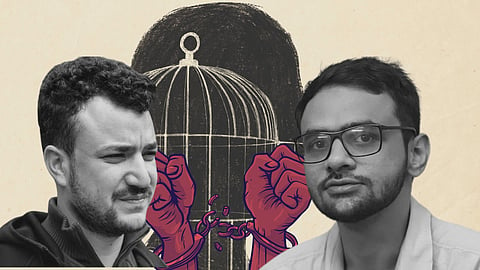

THE recent arrest of Mahmoud Khalil in the United States, an active member of Columbia University’s protests against the ongoing genocide in Gaza, takes me back to 2016 when student political leaders Umar Khalid, Kanhaiya Kumar and Anirban Bhattacharya were arrested by the Delhi Police on charges of sedition. A controversy had stemmed from an alleged event at Jawaharlal Nehru University (JNU) where slogans allegedly critical of India and sympathetic to Afzal Guru, had been raised.
The two incidents are not isolated legal actions—they are blatant examples of how governments manipulate national security laws to silence dissent. These cases expose the deep flaws in the so-called democratic legal systems of the U.S. and India, where constitutional guarantees of free speech crumble the moment political activism threatens the ruling establishment. The strategic abuse of criminal law, whether through immigration detention or sedition charges, demonstrates how both governments use legal systems as tools of authoritarian control rather than for protectors of civil liberties.
