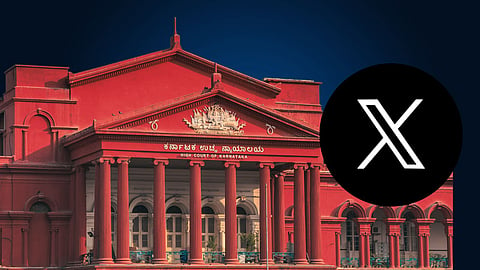

ON MARCH 5, the Elon Musk-owned social media platform X Corp. (formerly Twitter) filed a writ petition before the Karnataka High Court, challenging the Union government’s creation and use of the ‘Sahyog’ portal - a centralised digital mechanism that enables government agencies to issue content-blocking orders.
The petition is being heard by Justice M. Nagaprasanna, and its implications reach far beyond this one platform. At stake is the very legal architecture of digital content regulation in India.
About 'Sahyog'
Last year, the Ministry of Home Affairs (‘MHA’) launched the 'Sahyog' portal, an automated platform designed to enhance the efficiency of the process through which the appropriate government or its agency issues notices to intermediaries, under Section 79(3)(b) of the Information Technology Act, 2000 (‘IT Act’). The portal aims to streamline the procedure for the removal or disabling of access to online content that is being misused for unlawful activities.
The core objective of the 'Sahyog' portal is to consolidate the efforts of ‘authorized agencies’ and online intermediaries and subsume onto a single platform, enabling swift and coordinated actions against illegal online content. Additionally, this initiative also necessitates intermediaries, such as social media platforms and content hosts, to comply with the notice-based removal procedures. In doing so, ‘Sahyog’ is a step towards a cleaner and safer cyberspace - guarding the interests and security of Indian citizens in the digital age.
Relevant provisions of the Information Technology Act, 2000
Section 69A: This provision, under the IT Act, 2000, grants authority to the central government to block public access of online content under specific circumstances - including for protecting national security, maintaining public order, and safeguarding the sovereignty of India. It allows government agencies to take immediate action against harmful online content that poses a threat to India's security or stability.
Section 79: Known for providing "safe harbor" protection, Section 79 shields online intermediaries from liability for third-party content, provided that these intermediaries act in a neutral capacity. However, under Section 79(3)(b), intermediaries relinquish this exemption if they fail to act expeditiously upon receiving notices relating to illegal content.
What the petition contends
The petition contends that the ‘Sahyog’ portal, developed and deployed across various central ministries, including the Ministries of Electronics and IT, Home Affairs, Defence, Finance, and Railways, creates a parallel mechanism to issue blocking orders without adhering to the procedural safeguards prescribed under Section 69A of the IT Act, and the Information Technology (Procedure and Safeguards for Blocking for Access of Information by Public) Rules, 2009. Instead, government authorities have allegedly relied on Section 79(3)(b) of the IT Act to compel intermediaries to comply with takedown orders - an approach that X Corp. argues is both unlawful and unconstitutional.
What X Corp. seeks from the Court
In the writ petition, X Corp. has sought declaratory reliefs and quashing of a series of notifications issued under the ‘Sahyog’ framework. The company argues that Section 79(3)(b), which was designed to provide conditional safe harbour to intermediaries, does not confer any independent authority upon the government to issue blocking directions. Instead, the sole statutory mechanism for such action lies in Section 69A, which mandates due process, including written reasons, notice to the affected party, and oversight by a review committee. The petitioner further prays that no coercive or prejudicial action be taken against its representatives, employees, or officers for refusing to join or comply with the ‘Sahyog’ portal, pending final adjudication.
The March hearings
The Court’s initial response came on March 17 when Justice Nagaprasanna heard Senior Advocate K.G. Raghavan for X Corp. and Additional Solicitor General K. Arvind Kamath for the Union. While X pressed for interim relief, arguing that the blocking rules upheld by the Supreme Court in Shreya Singhal v. Union of India (2015) are being circumvented, the government contended that no urgent harm justified such relief at that stage. The Court declined to grant interim orders but reserved liberty for X Corp. to return to court in case of any coercive actions, listing the matter for March 27.
On March 27, the Union government submitted its objections, and X Corp. requested time to respond. The matter was then adjourned to April 3 when both sides finally presented detailed submissions.
Solicitor General Tushar Mehta, appearing for the Union along with Kamath, defended the current regulatory practice. Raghavan argued that the use of Section 79(3)(b) as a vehicle for censorship not only violated statutory limits but also created a shadow legal regime devoid of transparency and oversight.
The Court once again refrained from granting interim relief and reiterated the liberty granted in the earlier order. In its order of April 3, the High Court noted that the matter had been heard in part, and that “on the consent of the parties”, it was to be listed next on April 24 for final disposal.
But a subsequent order on April 21 noted that the matter had been adjourned. According to information available with The Leaflet, the matter has been adjourned till 1 July 2025.
Interestingly, on April 3, X Corp. also submitted a memo appending several posts from the platform that were allegedly subject to informal takedown pressures - furthering its argument that ‘Sahyog’ is being used to impose unofficial and undocumented censorship.
The broader constitutional question
What makes this case particularly attention grabbing is that it is not just about the platform involved or the arguments raised. At its core, X Corp. v. Union of India represents a deeper legal conflict about the nature of state power in the digital age. If the governmental practices such as issuing of takedown orders through use of the ‘Sahyog’ portal is upheld, this could mark a fundamental shift - straining how online speech is governed - leading to distancing away from procedural legality and validating opaque executive discretion.
In today's dynamic digital realm, the Indian balance between regulation and rights has become increasingly precarious. The use of Section 79(3)(b) - a provision meant to define when intermediaries lose safe harbour protection - to justify coercive state action appears to dilute the framework carefully crafted by the Supreme Court in Shreya Singhal.
The Shreya Singhal precedent
In the Supreme Court’s landmark 2015 ruling in Shreya Singhal, the Court read down Section 69A of the IT Act to uphold its constitutionality only when accompanied by procedural safeguards, including written orders, reasons for blocking, and the presence of a review mechanism. The Court stressed that restrictions on online speech must adhere strictly to the grounds laid down under Article 19(2) and be guided by the principles of necessity and proportionality. The Court drew a clear distinction between discussion, advocacy, and incitement, holding that only speech that rises to the level of incitement can justify curbs on expression.
This interpretive framework underpins X Corp.'s contention that the ‘Sahyog’ portal bypasses due process by invoking Section 79(3)(b) - a provision never meant to authorise direct censorship - and thus creates a parallel and opaque regime of content regulation. Shreya Singhal is foundational to assessing the legality and legitimacy of the ‘Sahyog’ mechanism.
The dangers of opaque executive discretion
There is a growing unease with the increasing exercise of executive discretion in the world of online speech regulation - discretion that increasingly operates outside of statutory clarity, judicial oversight, or public transparency. 'Sahyog' is exemplary of a shift towards bureaucratic opacity, where orders to block or remove content are neither publicly disclosed nor subject to adversarial challenge. Bypassing the procedural safeguards under Section 69A and leaning onto Section 79(3)(b) is like construing a shadow over censorship architecture - evading accountability and blurring legal boundaries.
This not only damages the constitutional guarantee under Article 19(1)(a), but also severs the delicate balance that must exist between state power and individual freedom.
As the judiciary begins to examine the mechanics of 'Sahyog', what is truly under scrutiny is the legitimacy of executive action that evades democratic scrutiny, all in the name of national interest, public order, or sovereignty. In absence of transparency, reasoned orders, or access to remedies, free speech stands at the risk of being filtered through the lens of unchallengeable state authority.
What lies ahead
The outcome of this case may well determine whether India will continue to abide by transparent, accountable, and rule-of-law-based digital governance, or will slide into a regime of executive-driven content regulation. The stakes are not only for X Corp., but for every intermediary, journalist, and citizen using the internet to speak, dissent, or simply share information.
As the Karnataka High Court is set to continue hearing the matter on 1 July 2025, the case will not only test the legal foundations of the 'Sahyog' portal but could also set a precedent for the legitimacy of digital censorship mechanisms in India.
Note:
All Court orders are available on the Karnataka High Court’s website.
Case Detail: WP 7405/2025.