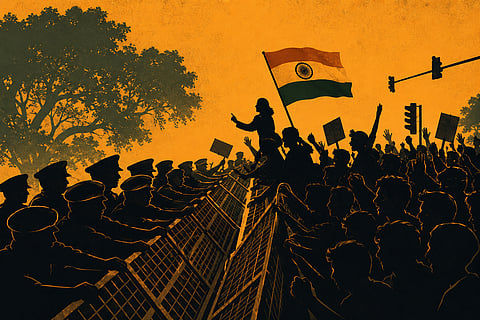

IMMEDIATELY AFTER THE resignation of Union Education Minister Dharmendra Pradhan, which happened weeks after mass demonstrations by students all over India, an understanding was reached between representatives of the Cockroach Janta Party (‘CJP’) and the Union of India through its two ministers, namely J.P. Nadda and Dr. Jitendra Singh.
There is no document, at least none in the public domain, as to what exactly was signed, if at all, between the CJP and the ministers on the basis of which the protests were called off with immediate effect. What we know is that Dharmendra Pradhan resigned and that the ministers assured the CJP that cases filed against protesting students would be withdrawn in BJP-ruled states.
Before coming to the legal nitty-gritties of the process involving the withdrawal of cases, let us look at precedents for settlement between civil society and the State. Following mass agitations, an outstanding example of settlements reached by students, specifically the All Assam Students’ Union (‘AASU’) and the All Assam Gana Sangram Parishad, was the Assam Accord signed in the year 1985. Unlike the oral understanding reached between the CJP and the two Union Ministers, the Assam Accord was signed in the presence of the then Prime Minister Rajiv Gandhi.
In the present case concerning the students’ agitation against rampant paper leaks and the subsequent calling off of the protest, no such piece of document is available in public record, if one was signed at all, regarding the terms on which the protest was called off. Be that as it may, what is important is that states such as Assam, Bihar and West Bengal, which are also BJP ruled states, have issued orders stating that they would ask the concerned authorities to take appropriate steps to withdraw cases against students in connection with the protest. This does indicate that such an agreement was arrived at the time when the CJP withdrew the agitation.
