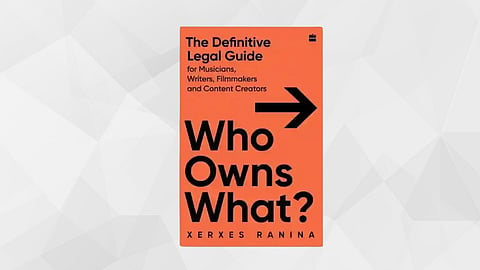

Sometimes, all it needs is a sentence or two to know if a book will be liked and remembered by readers. I spotted that sentence in Xerxes’ Introduction to his book when he says,
“What I admire most in a person creating a work out of a deep need to give expression to their inner voice is the passion and creativity on display. It is the highlight of my work to see the sparkle in a client’s eye when she describes her project, and nothing is more satisfying than helping her protect her creation.”
With this, Xerxes had placed himself immediately on the side of the individual creator, and thus drawn my attention. This was not a snooty, suited IP lawyer defending the interest of a heavyweight brand or production house, but someone who cared about the rights of artists.
Who Owns What? is a very valuable form of hand holding in the times we live in, when a literal explosion of platforms has enabled many types of creative expression, and the overlapping nature of content by writers, stand up comedians, influencers and podcasters has brought questions of ownership of material over and above that already faced by creative artists in earlier years. Consciously written by Xerxes in simple and understandable terms, it can help creators ask the right questions at the time of assigning rights to their work, negotiate better, and retain enough control over their material to not feel cheated or overlooked.
The creative process is itself a pretty demanding one. It means overcoming self-doubt and negative feedback, following through on some instincts and abandoning others, polishing and perfecting what one wants to present to the outside world. Then, one is also faced with the daunting questions of: How will my work be received? Will it be understood, or rejected? Who will profit from my efforts in the marketplace of ideas? Can I trust this publisher/producer/agent/collaborator and so on. The question of copyright is woven into such questions and concerns, and creators often worry that they lack the resources or understanding to protect their own interests.
